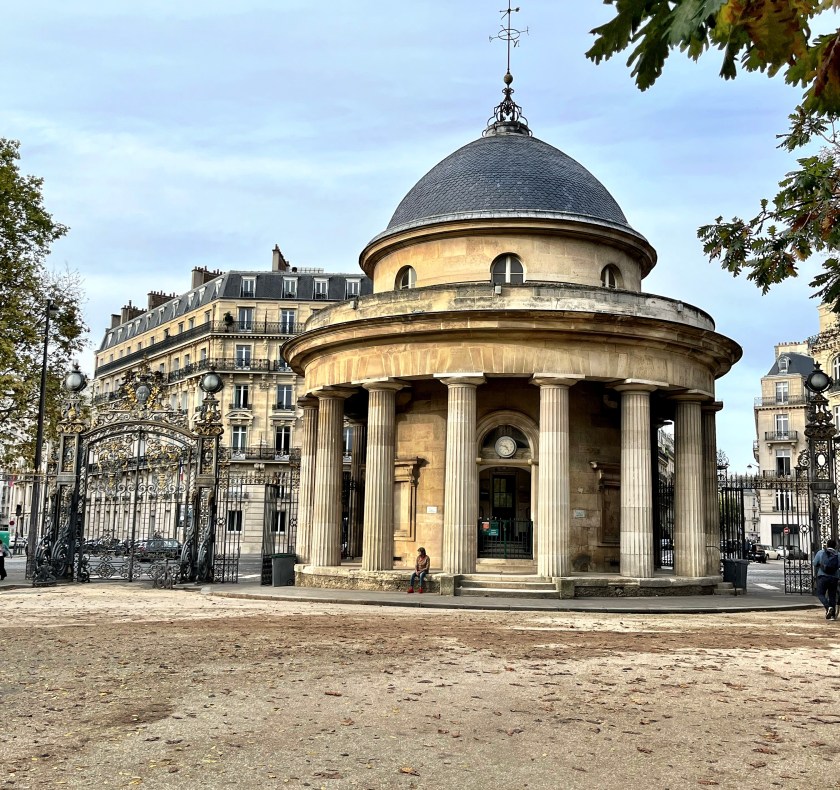
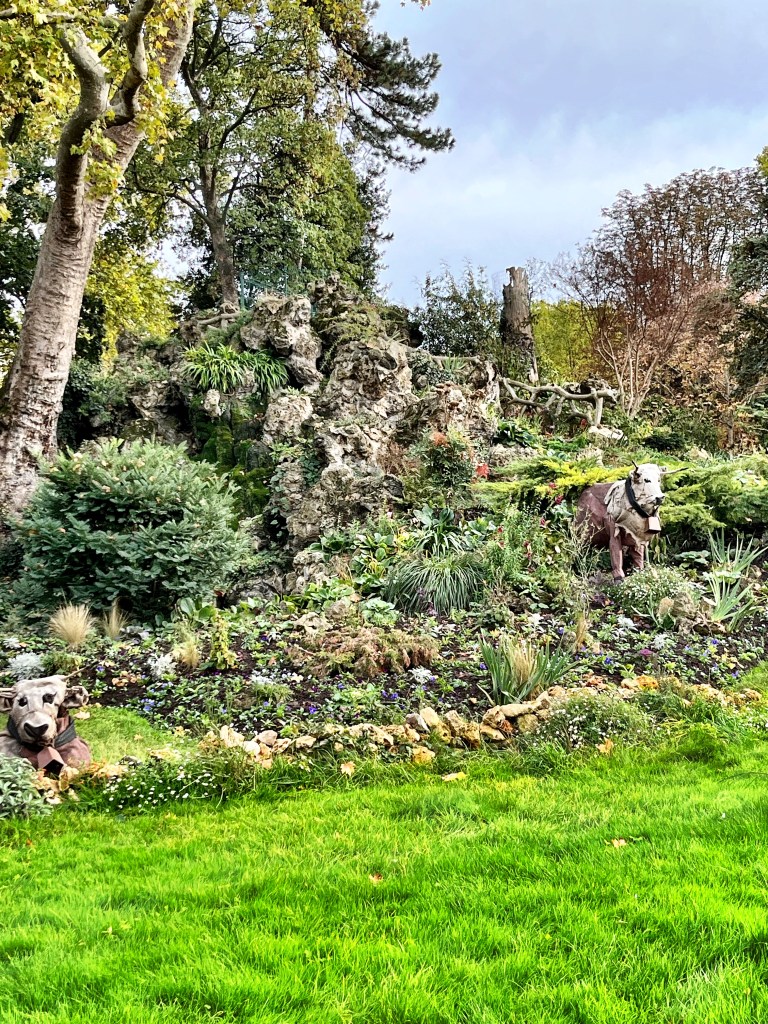
One of the nicest parks in Paris is Park Monceau. It’s not in my neighborhood but it is a stop of one of the buses from here so I stopped by the other day. I was hoping for a lot of Autumn color. There was some but very little red.
Linda Mathieu's experiences living as an American expat in France
One of the nicest parks in Paris is Park Monceau. It’s not in my neighborhood but it is a stop of one of the buses from here so I stopped by the other day. I was hoping for a lot of Autumn color. There was some but very little red.
I have a lot more posts on the Cotswolds in England but thought I better post this before we are well into October.
As I recall, Paris gets hot every September. Looking at old Facebook postings through the years, I mention the heat almost each year. This year was no exception.
I was in the area of Parc Monceau so strolled in for a few photos. It was Wednesday and it was packed with children.
Looks just like Summer except that the chestnut trees have beginning Autumn hues and there are chestnuts on the ground-always a sign of Autumn.
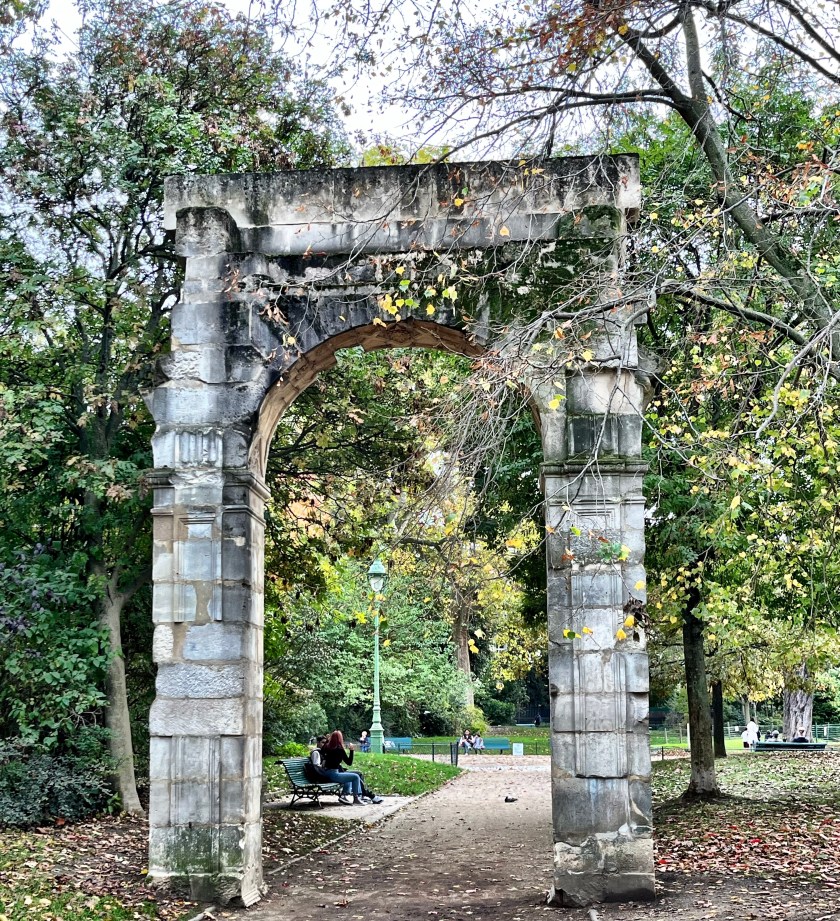
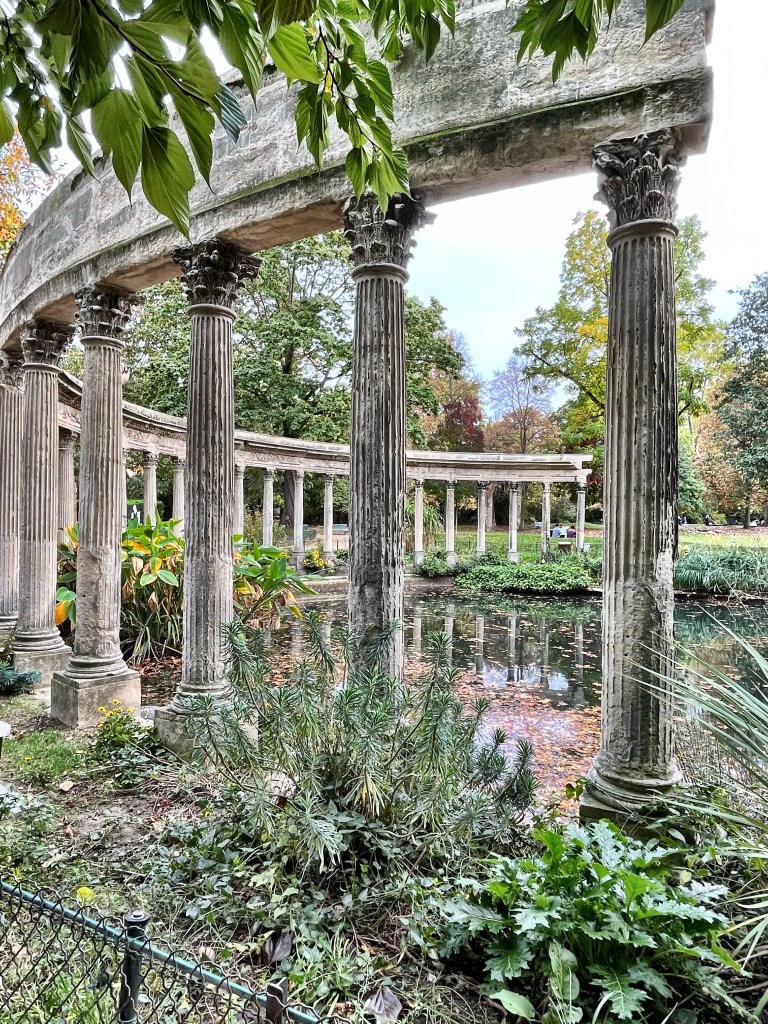
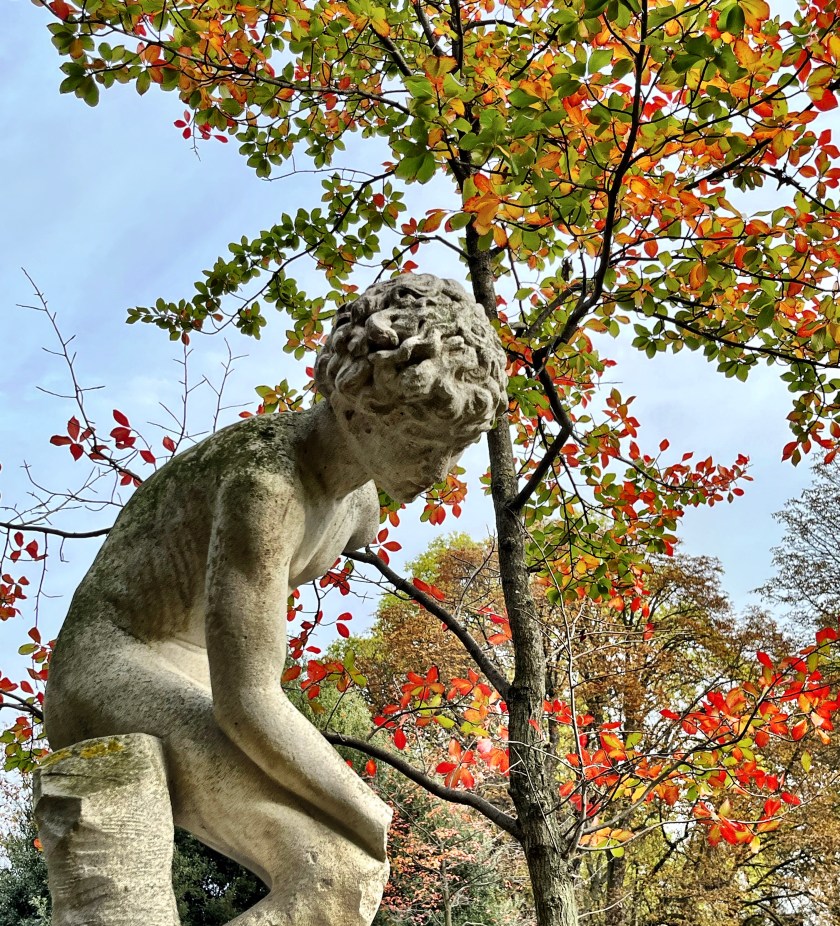
There is a Roman theme in the park.
The children’s carrousel was going.
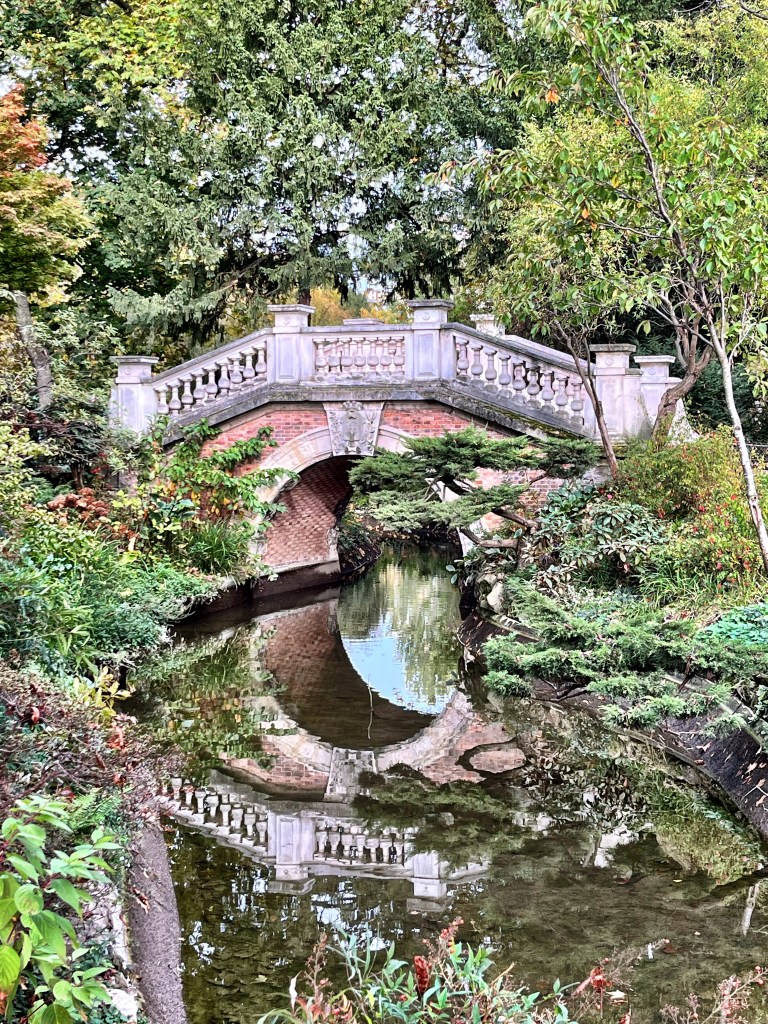
A bridge right out of Venice.
Afterwards, I met a friend for lunch at this cute place.
Near the Jacquemart-André Museum is the Parc Monceau. It’s a very beautiful park but I am seldom there as it’s nowhere near where I live-it’s in the 8th arrondissement. It’s different from most parks and when I was getting ready to post on my visit there I did a Google search and it has a fascinating history. It was established by Phillippe d’Orléans, Duke of Chartres, who was a cousin of King Louis XVI. He decided to created a public park and being a lover of English gardens, wanted it to be similar, full of what are called follies, which are reconstructions of buildings from different ages and countries. He wanted to surprise and amaze visitors. When it was first created there was an Egyptian pyramid, a Roman colonnade, antique statues, a pond of water lilies, a farmhouse, a Dutch windmill and on and on. There were often unusual animals there too, such as camels. In the end, despite being a member of the assembly that voted to execute his cousin, he too became a victim of the guillotine and the park was nationalized.
The park was reduced by half in size and houses of the wealthy were built on the property. When Napoleon III came into power, Haussmann, that great city architect, did a lot of redesigning of the park. In 1871 after the downfall of Napoleon, there was a rising of what is called the Paris Commune which was then crushed and the park was the site of a massacre of the Communards by army troops. (This also happened in Pere Lachaise Cemetery). So, wow, lots of history, right?